When AI stops being software and starts operating
AI may be moving from software that assists humans to software that operates parts of economic systems. That changes where value may accumulate across compute, models, data, agents, economic rails and physical AI.

Investment Notebook / 001
For a long time, the best way to think about artificial intelligence was as a productivity layer.
A copilot.
A better search tool.
A faster editor.
An assisted programmer.
A smarter interface over systems that already existed.
That phase is still happening. But it is not the part that interests me most.
What is becoming increasingly clear is that AI is crossing a boundary: from software that helps a person work to software that can operate parts of an economic system.
That distinction sounds semantic.
It is not.
An assistant writes an email.
An operator identifies that a client is blocked, finds the contract, locates the missing requirement, compares the applicable policy, opens the right task, routes it to the right person and follows it until closure.
An assistant tells you where the dollar is trading.
An operator understands which price is a reference, which one is executable, on which venue, for what size, with what liquidity, settlement path and counterparty risk.
An assistant summarizes a database.
An operator understands what changed since yesterday and what needs to happen next.
That transition guides much of the way I think about investing in artificial intelligence.
The market still prices much of AI as software
Most of the value created so far has concentrated in three obvious places.
Chips.
Cloud.
Models.
That makes sense.
Without compute there is no training.
Without infrastructure there is no inference at scale.
Without models there is no intelligence layer.
But if the technology continues to evolve in the direction we are already seeing, the larger economic change may happen one layer above.
When intelligence stops merely generating text and starts participating in real workflows.
Buying.
Selling.
Reconciling.
Programming.
Serving customers.
Researching.
Executing.
Monitoring.
Escalating exceptions.
Moving information between systems.
And eventually moving money.
At that point, the economic unit begins to move away from:
seat × monthly subscription
and closer to:
work performed × economic value created.
That change can alter completely where value accumulates.
My mental portfolio has six layers
When I think about AI as an investment, I am not trying simply to pick “the best AI company.”
I am trying to understand where value can accumulate across the stack.
1. Compute
The most obvious layer.
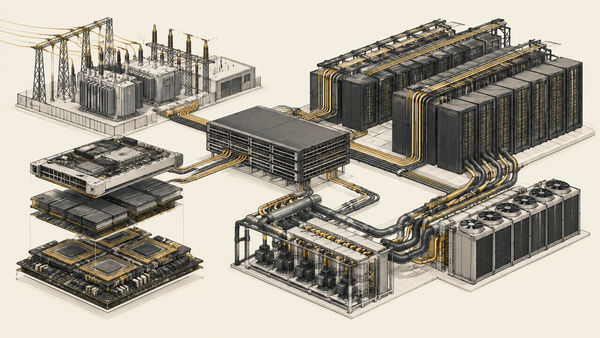
GPUs, accelerators, networking, memory, data centers and power.
Model progress still requires extraordinary amounts of physical capital.
And as intelligence becomes consumed in production, what matters is not only training models but serving them with acceptable latency, availability and cost.
The thesis here is not simply that AI needs chips.
It is that intelligence is becoming a new category of demand for physical infrastructure.
2. Models
Models remain fundamental.
But I do not assume all the economic margin will remain in this layer.
Models tend to become better.
Cheaper.
More specialized.
More interchangeable for some tasks.
Value may migrate from the model itself toward whoever can place it inside a system that actually works.
So I am less interested in which benchmark a model won this week and more interested in:
which model can perform useful work, reliably, inside a real operation?
3. Data and context
This layer is underestimated.
A model can be extraordinarily intelligent and still be useless inside a company.
Because it does not know:
who can do what;
which document is authoritative;
which information is current;
which customer is speaking;
which decision has already been made;
which system contains the truth;
which exception requires human approval.
That turns data, identity, permissions, retrieval and context management into economic infrastructure for AI.
It is not enough to possess knowledge.
The system needs to know which knowledge is valid now.
4. Agentic systems
This is the layer that interests me most.
Agents are not interesting because they can click buttons.
They are interesting because they begin to combine:
perception;
memory;
reasoning;
tools;
authority;
execution;
feedback.
When that works, software stops waiting for an instruction for every individual step.
It receives an objective.
Observes the state.
Executes.
Validates.
Corrects.
Continues.
The difference between traditional automation and agents is somewhat like the difference between a line of code and an employee.
Not because the machine becomes human.
But because the unit of coordination changes.
5. Economic rails
If agents really begin operating systems, they will eventually need to participate in the economy.
Receive.
Pay.
Buy compute.
Contract services.
Settle obligations.
Move collateral.
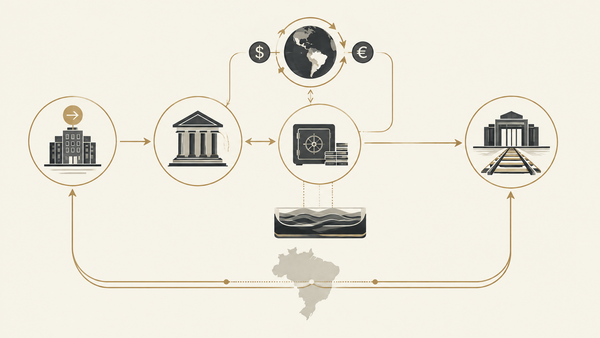
That makes payments, stablecoins, wallets, identity and programmable money much more interesting.
Part of the future demand for digital money may not come from people wanting to “use crypto.”
It may come from software needing money that also works like software.
That is one reason I do not completely separate my stablecoin thesis from my AI thesis.
They may eventually converge.
6. Physical AI
Finally comes the point where software meets the physical world.
Robotics.
Energy.
Logistics.
Factories.
Vehicles.
Data centers.
Batteries.
Intelligence leaves the screen.
At that stage, the system needs to understand not only language but cost, time, space, energy, safety and physical consequences.
It is probably the longest part of the curve.
It may also be where the economic scale becomes enormous.
What I look for in a position
I do not want exposure simply to the word “AI.”
I look for more specific characteristics.
Bottleneck.
Does the company control something the rest of the system needs?
Distribution.
Is it already close to where the work happens?
Data advantage.
Does the product improve as it observes real usage?
Switching cost.
Once embedded in the workflow, is it difficult to replace?
Economic participation.
Does it capture part of the value created, or does it merely charge a license?
Operating leverage.
Can revenue grow much faster than the structure required to produce it?
Survival.
Can the company survive long enough for the thesis to mature?
That last one may be the most important.
What would make me change my mind
A serious thesis needs to contain its own failure conditions.
I would become much more skeptical if we discovered that agents cannot materially improve reliability on long-horizon tasks.
Or if inference remains too expensive to replace meaningful economic work at scale.
Or if models commoditize so quickly that no application layer can sustain pricing power.
Or if companies conclude that productivity gains are real but too small to justify major architectural changes.
Or if governance, security and legal responsibility prevent software from receiving enough authority to operate.
These are not details.
They are what separates an impressive technology from a structural economic change.
The question guiding the portfolio
In the end, the question is relatively simple:
What happens when software stops being a tool used by companies and starts becoming part of the operating workforce of companies?
If that happens at scale, several categories that currently look separate begin to converge.
Cloud.
Models.
Data.
Agents.
Payments.
Cybersecurity.
Robotics.
Energy.
And perhaps that is why AI is such a difficult thesis to summarize as a list of stocks.
The opportunity is not contained in one company.
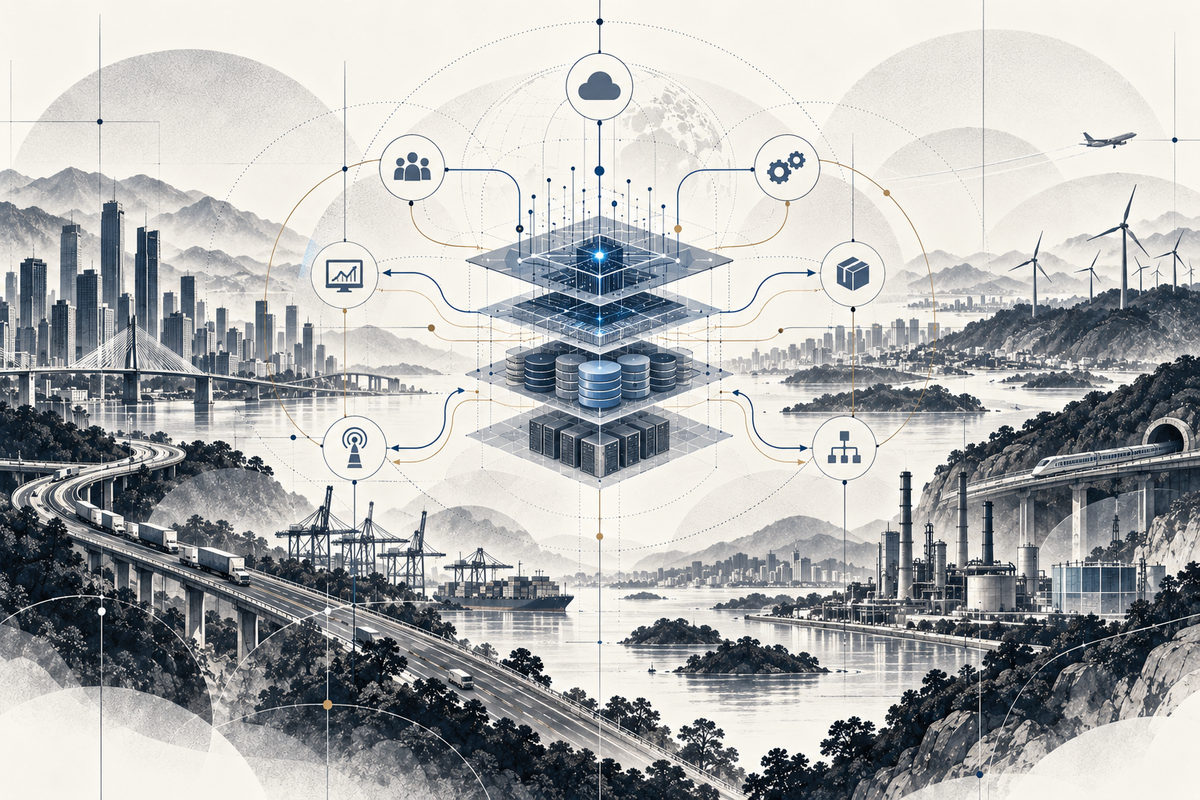
It is in a reorganization of the economic stack.
The portfolio comes later.
First we need to understand the system.
Investment Notebook
This is the first note in a series about where I am putting attention — and, in some cases, capital — as artificial intelligence moves from assistant to operator.
The next pieces will open the portfolio layer by layer:
Compute.
Models.
Data & Context.
Agents.
Economic Rails.
Physical AI.
The goal is not to publish recommendations.
It is to make the thesis auditable.
What we believe.
What needs to be true.
What can go wrong.
And what would make us change our mind.