Drex vs Stablecoins
CBDCs and private stablecoins: competitors or complements? The answer shapes the future of Brazil's financial system.


The launch of Drex by Brazil's Central Bank raises a fundamental question: are CBDCs and private stablecoins competitors or complements? The answer has profound implications for the future of the Brazilian financial system.
Drex is a wholesale central bank digital currency (CBDC), initially designed for transactions between financial institutions. Unlike Pix, which is a payment system, Drex is a new form of money — a direct liability of the Central Bank in digital format.
Stablecoins like USDT, USDC, and BRZ are private tokens backed by assets. Their value is maintained through reserves (dollars, treasury bonds) or algorithmic mechanisms. They operate on public blockchains and can be transferred globally without banking intermediaries.
Drex (CBDC)
permissioned · central bank→vs.→Stablecoins
public · private
Custody, settlement finality, programmability, jurisdiction — not competition, specialization.
The architecture is fundamentally different. Drex operates on a permissioned blockchain controlled by the Central Bank. Only authorized institutions can participate directly. Stablecoins operate on public blockchains, accessible to anyone with a digital wallet.
For domestic payments, Drex offers clear advantages. Instant settlement with finality guaranteed by the Central Bank eliminates counterparty risk. Integration with the regulated financial system facilitates compliance and consumer protection. For institutions, it reduces settlement costs and increases operational efficiency.
Stablecoins shine in different use cases. Cross-border payments are faster and cheaper than traditional bank transfers. Access to digital dollars is valuable in economies with unstable currencies. Composability with DeFi opens possibilities for yield and programmable financial services.
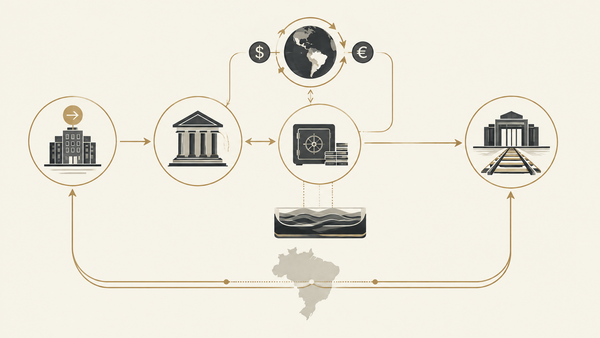
BRZ, a Brazilian stablecoin backed by reais, illustrates the complementarity. It can serve as a bridge between the crypto ecosystem and the traditional financial system. Users can convert reais to BRZ, operate in DeFi, and convert back to reais — all without leaving the local-currency ecosystem.
B3 announced plans for its own stablecoin, signaling that the capital market sees value in stable-value tokens. An exchange-issued stablecoin could facilitate trade settlement and serve as collateral in derivatives.
Drex as settlement infrastructure could, paradoxically, strengthen stablecoins. If real-world asset (RWA) tokens settle on Drex, stablecoins that integrate with that ecosystem gain utility. Interoperability, not competition, may define the future.
Regulation will be the decisive factor. The Central Bank has already signaled that virtual asset service providers (VASPs) will need a license. Stablecoins operating in Brazil will need to comply. That could create a layer of "regulated" stablecoins coexisting with Drex.
The most likely scenario is specialization: Drex for institutional settlement and high-value transactions; stablecoins for cross-border payments, DeFi access, and use cases requiring public blockchains; BRZ and similar tokens as bridges between the two worlds.
The real competition isn't between Drex and stablecoins, but between a modernized Brazilian financial system and foreign alternatives. If Brazil builds an efficient ecosystem integrating CBDC, regulated stablecoins, and tokenized assets, it can become a global reference. If it fragments the market with excessive regulation, capital and innovation will migrate to more welcoming jurisdictions.
Follow the money through Brazil.
ONCHAIN FX covers markets, capital, stablecoins, technology, infrastructure and the systems behind moving serious money. Get the next note in your inbox.
Moving meaningful volume through Brazil? Talk to us.