Brazil and the Silent Consolidation of Digital Money
Brazil's digital assets market isn't heading toward regulatory collapse — it's heading toward structural reorganization.

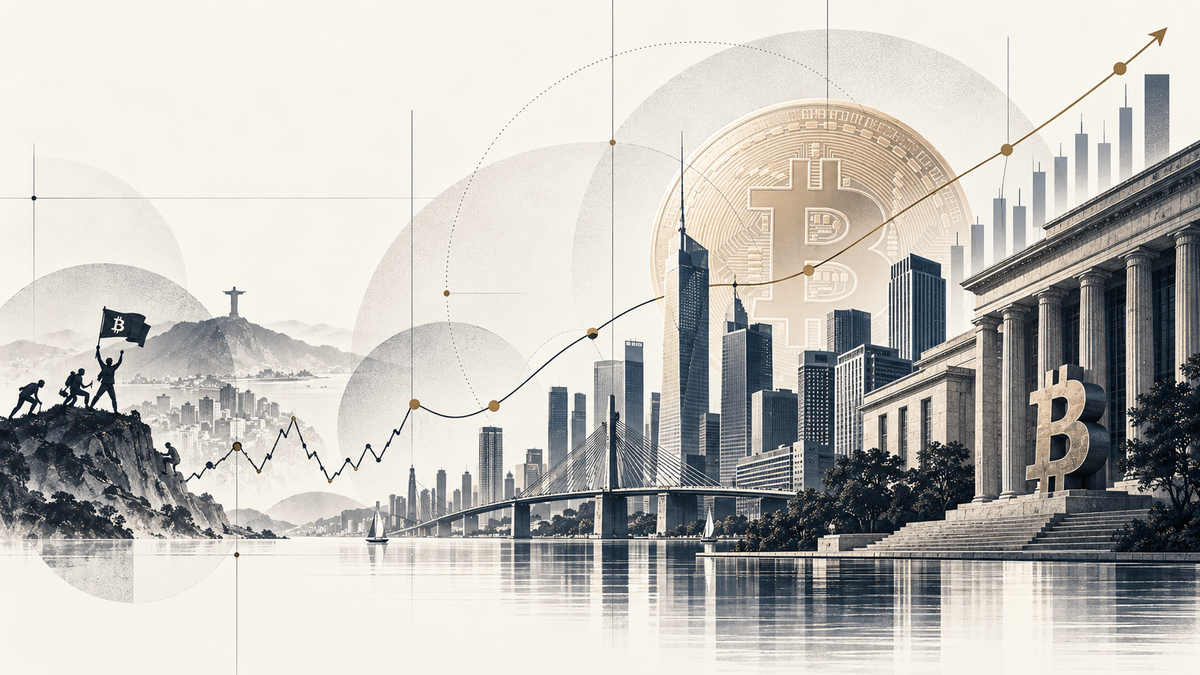
The Brazilian digital assets market is not heading toward regulatory collapse. It is heading toward structural reorganization — and, as usually happens when a legal framework matures, this reorganization tends to show up less as visible rupture and more as mergers, acquisitions, and deep infrastructure integration.
For years, a significant share of payment institutions operated under regulatory frameworks designed for a less digitized financial system. Electronic money gained scale, complexity, and systemic impact faster than the rules meant to frame it. The model worked and brought clear efficiency gains, but it also carried zones of opacity that were hard to sustain long-term. As André Esteves recently observed in Davos, Brazil has become a "Disneyland for fintechs," where new players operate in a "parallel system" without the same rules as traditional banks — efficient, but not explicit about risk and accountability.
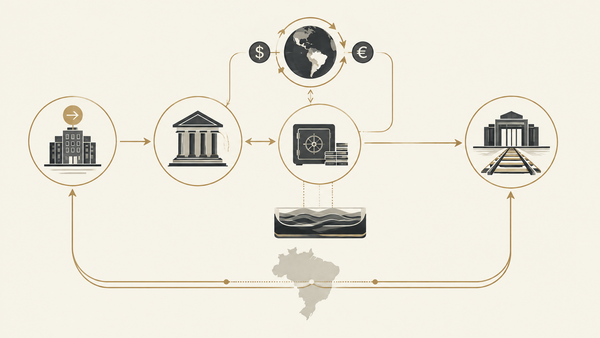
Fragmented VASP / PI landscape
gray zones→BCB resolution wave
519 / 520 / 521→Consolidated licensing tiers
M&A, not collapse
Brazil's digital-money market is reorganizing, not shrinking.
That cycle is starting to close. The consolidation of Virtual Asset Service Provider (VASP) licensing, combined with tougher, more sophisticated requirements for Payment Institutions, raises the bar for the entire financial system. Digital money stops occupying a peripheral space and becomes treated as an integral part of the national financial architecture. It isn't just a new license — it's a change in level.
When that happens, the effect is predictable. Structures that grew on the back of isolated operational efficiency or flexible interpretations now face a clear choice: invest heavily in governance, capital, systems, and risk management — or seek scale and robustness through consolidation. In that context, mergers and acquisitions stop being opportunistic moves and become a natural consequence of the new regulatory framework.
There's also a less visible but decisive effect. As financial systems expand "from within," with tighter integration between payments, FX, settlement, and crypto assets, efficiency gains become measurable. The spread stops being just a cost perceived by the end user and starts reflecting structural decisions: where liquidity is formed, how risk is absorbed, and which cost layers are inherent to the system. That greater clarity echoes principles Web3 brought early on — reduced information asymmetry and greater operational transparency — now absorbed into the regulated system.
Brazil occupies a particular position in this process. The combination of Pix, a robust ecosystem of payment institutions, and an increasingly defined regulatory framework for crypto assets creates the conditions for a less fragmented, more institutional market. This isn't retraction — it's selection.
This movement isn't exclusive to Brazil. The European Union, with MiCA; the United States, with the redefinition of the role of custodians and intermediaries; and several Latin American countries are all moving in the same direction: integrating digital money into formal financial infrastructure, raising requirements, and shrinking gray areas. The difference is that Brazil enters this phase with already widely digitized systems and a modern payments base, which can accelerate the process.
The sector's next stage, then, will not be marked by "end of crypto" narratives or promises of total disruption. It will be marked by silent consolidation, rising requirements, and infrastructure reorganization. In that environment, those who understand that the future of digital money depends not just on innovation, but on structure, clarity, and legitimacy, will prosper.
Follow the money through Brazil.
ONCHAIN FX covers markets, capital, stablecoins, technology, infrastructure and the systems behind moving serious money. Get the next note in your inbox.
Moving meaningful volume through Brazil? Talk to us.